Legal and Humanitarian Imperatives for the ‘Day After’ in Gaza
6 February 2026After more than two years of hostilities, which have been marked by serious and systematic violations of international law, the entry into force of a fragile ceasefire on 10 October 2025 pursuant to the 20-point plan introduced by US President Trump and the subsequent adoption of UN Security Council resolution 2803 mark a critical juncture for the future of Gaza and the occupied Palestinian territory as a whole.
While any genuine effort to end the hostilities and alleviate human suffering should be welcomed, the 20-point plan and resolution 2803 raise a wide range of legal and humanitarian concerns.
This publication aims to provide guidance to stakeholders involved in implementing Security Council resolution 2803 and the 20-point plan, or engaged in other rehabilitation and reconstruction efforts in Gaza.
It covers the following topics:
- The Palestinian people’s right to self-determination, which must be the cardinal principle informing the interpretation and implementation of both documents;
- Select humanitarian issues that should be addressed as a matter of immediate concern, including humanitarian relief and commercial supplies; access to healthcare; shelter and housing; the protection, care, and education of children; displacement; the protection of detainees; the missing and dead; the protection of public and private property; as well as unexploded ordnance; and
- Transitional justice, accountability, and reparations.
This publication forms part of the IHL Centre’s new research project The ‘Day After’ in the oPt: Legal Parameters for a Changing Reality. Further instalments are forthcoming, including a publication that seeks to inform third States’ decision on whether and how to engage with resolution 2803 and the 20-point plan.
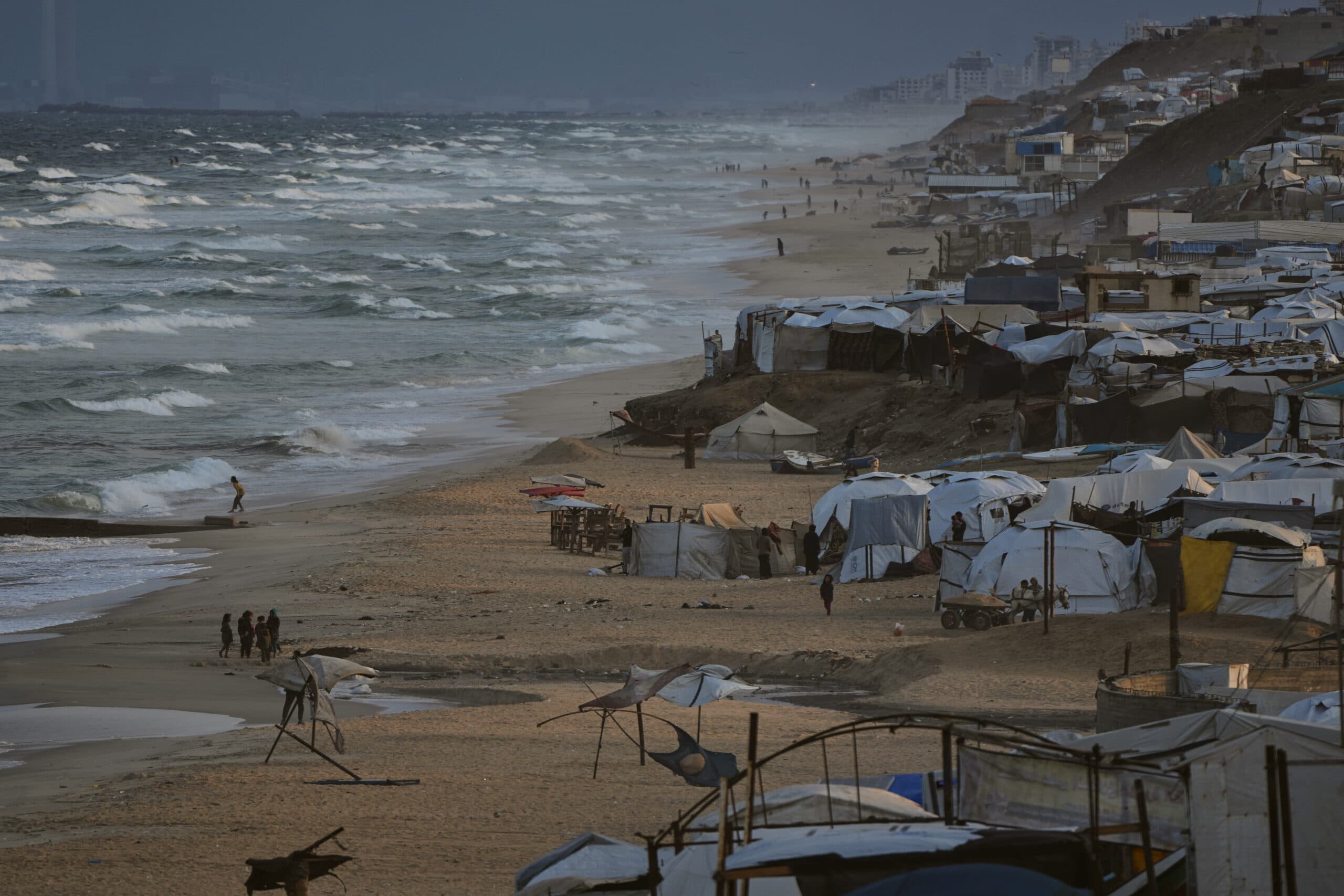
Cover photo: Palestinians walk along the beachfront next to a temporary tent camp in Deir al-Balah, central Gaza Strip, Tuesday, Nov. 25, 2025 (AP Photo/Abdel Kareem Hana). All Rights Reserved.