International Law Parameters for Third-State Engagement in Gaza
18 March 2026The adoption of US President Donald Trump’s 20-point plan for Gaza and United Nations (UN) Security Council resolution 2803 has prompted questions as to whether third States may participate in their implementation in a manner compatible with international law — and, if so, how.
A new publication from the IHL Centre, International Law Parameters for Third-State Engagement in Gaza, addresses these questions with a view to informing the approach taken by third States, including as regards their potential support to the Board of Peace (BoP), the International Stabilization Force (ISF), or the Civil-Military Coordination Center (CMCC). In particular, this legal brief:
- examines concerns regarding the compatibility of UN Security Council resolution 2803 and the 20-point plan with international law, and how such concerns should inform third States’ considerations when deciding whether and how to contribute to their implementation; and
- analyses the legal consequences for third States choosing to engage in the implementation of the resolution and plan, including their obligations to ensure respect for international law by parties to the conflict, the circumstances in which IHL and IHRL may apply to their own conduct, and the potential legal responsibilities and risks arising from such involvement.
This publication forms part of the IHL Centre's new research project The ‘Day After’ in the oPt: Legal Parameters for a Changing Reality. A previous publication that is part of this project addressed the Legal and Humanitarian Imperatives for the ‘Day After’ in Gaza.
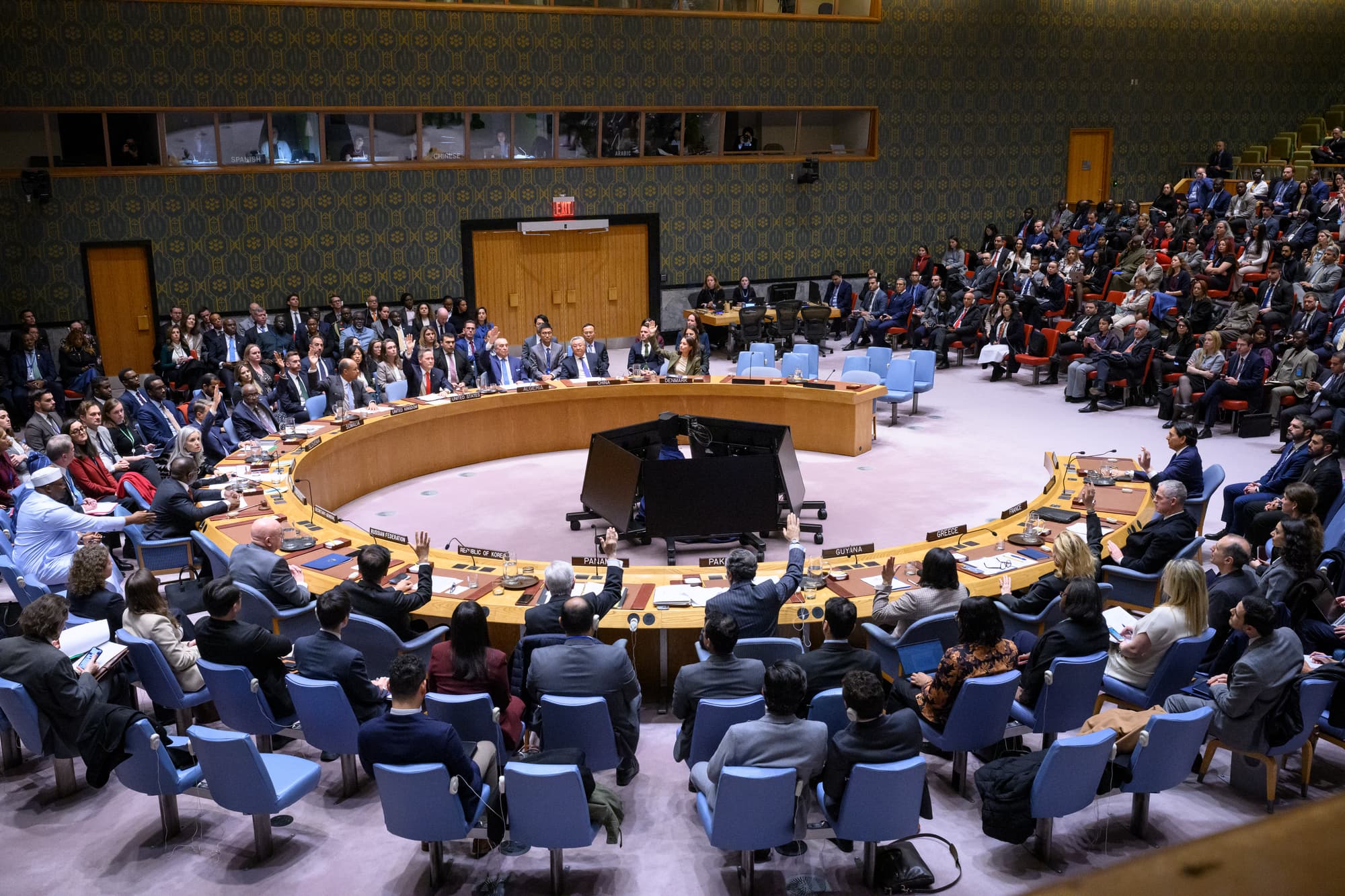
Cover photo: Security Council adopts resolution 2803 (2025) during the Security Council meeting on the situation in the Middle East, including the Palestinian question, Nov. 17, 2025 (UN Photo/Loey Felipe). All rights reserved.