The IHL Centre welcomes decision of Canada, France and the UK to prohibit trade with Israeli settlements in the West Bank
8 September 2026“The measures proposed by Canada, France and the UK represent an important yet overdue step towards giving practical effect to a legal position held by these States for many years, in compliance with international humanitarian law, and consistent with the obligations of third States identified by the International Court of Justice.”
Stephen Wilkinson, Director of the International Humanitarian Law Centre
The IHL Centre welcomes the decision of 8 September by the governments of Canada, France and the UK to ban the importation of goods from Israeli settlements in the occupied Palestinian territory (oPt), as well as to enforce targeted measures against settlements and against those who facilitate them or profit from them.
This step reflects the longstanding position of Canada, France and the UK that Israeli settlements in the oPt are illegal under international law and an obstacle to peace, and is consistent with the relevant legal obligations on third States, including those identified by the International Court of Justice (ICJ) in its 2004 and 2024 Advisory Opinions. The IHL Centre also welcomes the commitment made by several other countries to consider the introduction of national legalisation and/or to support European restrictions on trade in goods with Israeli settlements.
The prohibition on settlements in occupied territory is firmly established in international humanitarian law (IHL). Pursuant to Article 49(6) of the Fourth Geneva Convention, an occupying power is prohibited from deporting, transferring or encouraging the transfer of parts of its own civilian population into the territory it occupies. In its 2004 Advisory Opinion, the ICJ concluded that Israeli settlements in the oPt are in breach of international law. The 2024 Advisory Opinion specifically set out detailed obligations for third States in relation to this breach, including that they must not render any aid or assistance in maintaining the illegal situation.
The ongoing expansion of the settlement enterprise has involved the appropriation of Palestinian land and natural resources, restrictions on Palestinians’ freedom of movement and access to water, demolition and dispossession of property, increasing settler violence, and the displacement of Palestinian communities. It also contributes to the fragmentation and creeping annexation of the West Bank. In doing so, it undermines the territorial integrity of the oPt, the Palestinian people’s right to self-determination and statehood, and compromises the prospect of peace based on the establishment of a viable Palestinian State.
Settlement economies are sustained not only through trade in goods, but also through services, financing, investment, and other commercial relationships. The measures to be implemented should therefore effectively address relevant settlement-related economic activity, including trade, services, financing and investment that support or sustain settlements or their associated infrastructure while protecting legitimate Palestinian economic activity and minimising adverse impacts on the Palestinian population.
The IHL Centre welcomes the measures proposed today by Canada, France and the UK as an overdue but important step in the right direction, alongside action already taken by a number of other States. For instance, Spain has been enforcing a prohibition on imports of goods originating in Israeli settlements since September 2025; Ireland enacted a prohibition on settlement-goods imports in July 2026; and the Netherlands has adopted a national prohibition on the import, purchase and sale of settlement goods which will enter into force on 22 September 2026. In 2024, Norway updated its official advice to Norwegian companies not to engage in trade and business cooperation that serves to perpetuate Israel's occupation of Palestine.
The IHL Centre encourages all those States that have already initiated such measures to ensure they fully and effectively implement them. The Centre further calls on other States to urgently review their economic and trade relations with settlements in the West Bank and to take all concrete measures necessary to comply with their obligations under international law.
More information on the IHL Centre’s work in Israel and Palestine is available on our website. For comments, questions or interview requests please contact us at info@ihlcentre.org.
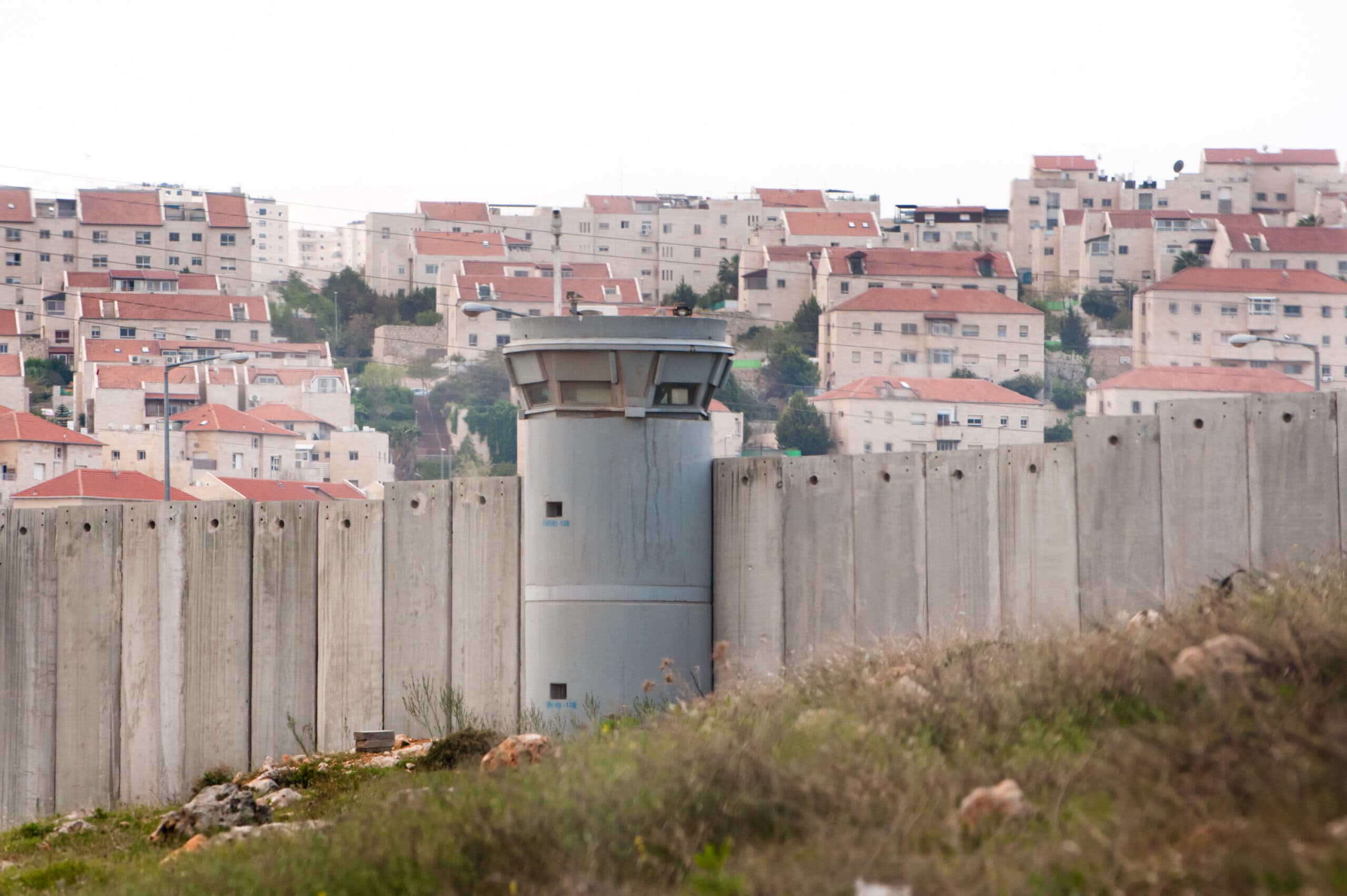
Cover photo: Israeli settlements and Separation Wall, East Jerusalem, 9.4.2011, RYAN RODRICK BEILER/ACTIVE STILLS. ALL RIGHTS RESERVED.