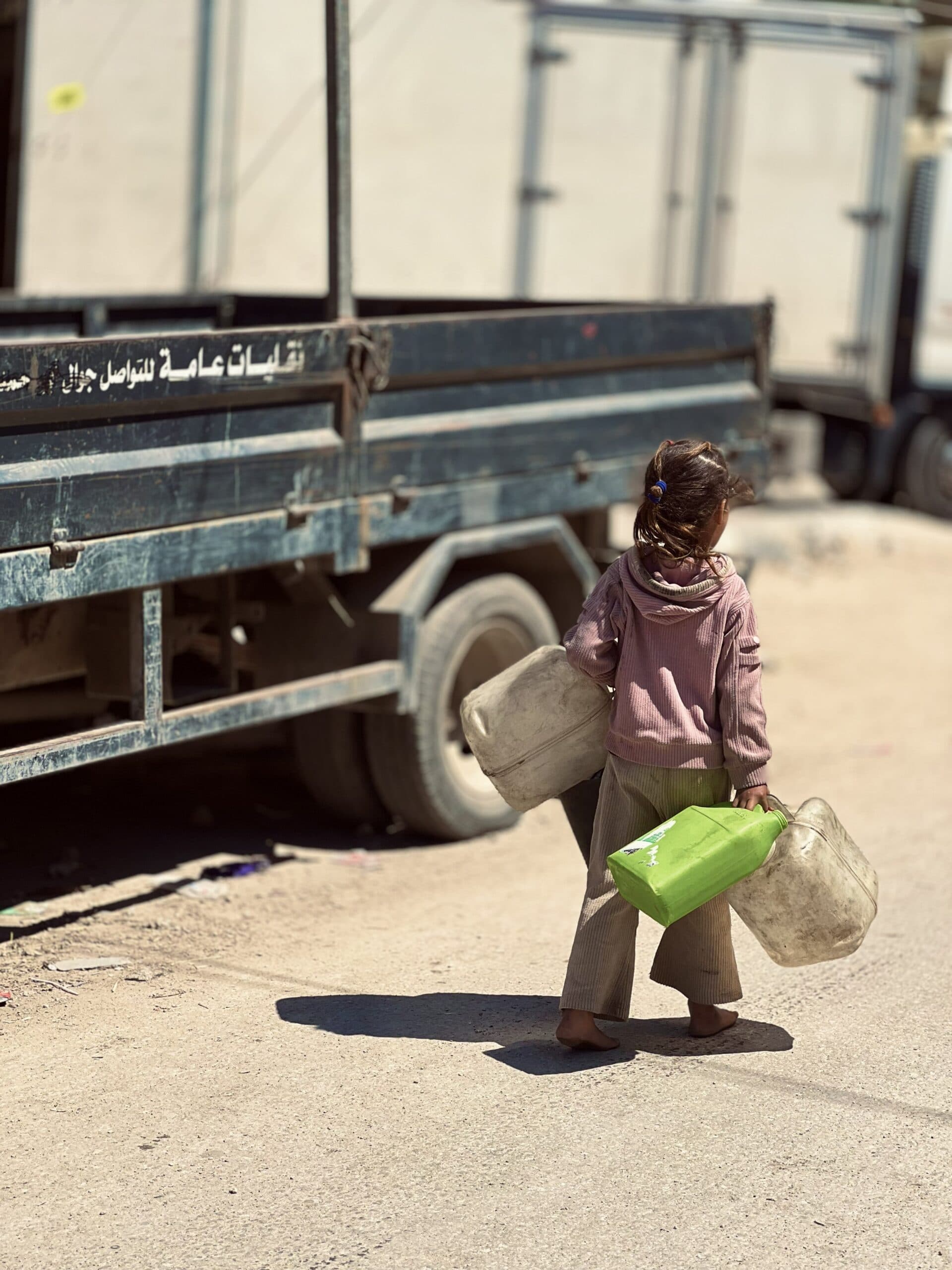
Three years of unimaginable suffering
7 October, 2026On 7 October, it will be three years since Hamas carried out its horrific attack, and Israel responded with relentless bombardment. Three years of indescribable suffering. Suffering that could have been avoided.
An entire generation of children has been robbed of its safety and childhood. Over the past three years, many have been forced to flee eight to ten times. They are still living in tents or among ruins. Winter is now approaching, bringing rain, cold, and disease. Young children are the hardest hit. Water and sanitation systems are not functioning. Food and healthcare are scarce. Around 700,000 children missed formal in-person schooling for three school years in a row. Nearly all children in Gaza have not had a formal school day since October 2023.
Diakonia's partner organizations are on the ground working to alleviate suffering. But it is also essential that international law is respected.
Tens of thousands killed
In the Hamas-led attacks on 7 October 2023, more than 1,200 people were killed and around 5,400 injured, according to Israeli sources.
Since then, more than 74,000 Palestinians in Gaza have been killed and over 175,000 injured, according to Gaza's Ministry of Health.
Almost all of Gaza lies in ruins. Around 80 percent of buildings have been destroyed. Schools and hospitals have been reduced to rubble.
Despite the ceasefire that came into effect a year ago, Israeli attacks continue, and the population of Gaza lacks even the most basic necessities for a dignified life.
Avoidable suffering
The horrific suffering experienced by both Palestinians and Israelis could have been avoided if international law had been respected.
During the Hamas-led attacks on 7 October, people were murdered and tortured. They were subjected to cruel and inhuman treatment, people were taken hostage, bodies were desecrated, and property was looted and destroyed. Those responsible may have committed war crimes and crimes against humanity.
Israel, for its part, appears likely to have violated the laws of war, also known as international humanitarian law (IHL), including [CF1.1]by carrying out attacks in densely populated civilian areas. It has created famine-like conditions by systematically depriving civilians of resources essential for survival. It has forcibly displaced millions of people, unlawfully restricted humanitarian actors, and attacked healthcare facilities, medical transports, and healthcare workers, all of whom are protected from deliberate attacks under IHL. These actions have contributed to the collapse of the healthcare system.
Israel has also unlawfully demolished entire residential neighborhoods and critical civilian infrastructure in areas under its control, and has detained thousands of Palestinians across the occupied Palestinian territory on grounds and under conditions that violate the safeguards set out in both IHL and international human rights law. Among other things, the International Committee of the Red Cross (ICRC) has been denied access to detainees. Testimonies and reports indicate widespread torture and abuse of Palestinians in detention.
Israel is believed to have committed serious violations of IHL and may also have committed other internationally wrongful acts, including crimes against humanity and genocide. These actions may also entail individual criminal responsibility for war crimes, crimes against humanity, and genocide.
Increased violence in the West Bank
Since October 2023, oppression of Palestinians in the West Bank and East Jerusalem has also intensified. The Israeli military has used excessive force, and attacks by settlers have become more frequent and more violent. Israeli authorities have failed to prevent these attacks and, in many cases, have instead enabled or supported them. They have rarely carried out meaningful investigations into what actually occurred. In addition, restrictions on Palestinians' freedom of movement have increased. Israel has also taken a number of administrative measures that suggest an intention to annex land. For example, the land registration process has resumed in parts of the West Bank.
Historical context
The events of the past three years cannot be viewed in isolation. They must be understood against the backdrop of Israel's 59-year occupation of Palestinian territory, which has long raised serious concerns about systematic violations of international law.
The situation in Gaza was already extremely difficult before 7 October 2023. Life was marked by blockade, poverty, and insecurity. Gaza was often described as the world's largest open-air prison.
According to the International Court of Justice (ICJ), Israeli settlements on occupied Palestinian land are illegal. In its 2024 Advisory Opinion, the Court held that Israel must immediately cease settlement activity and repair the damage caused. The ICJ also examined the displacement of Palestinians, the confiscation of land and property from Palestinian communities, and the introduction of discriminatory legislation and other measures. The Court concluded that Israel's continued presence in the occupied Palestinian territory as a whole is unlawful and must end as soon as possible.
Who bears responsibility?
The extensive violations committed in apparent breach of international law raise important questions about enforcement and accountability.
During the Nuremberg Trials following the end of the Second World War, nearly 80 years ago, the principle of individual criminal responsibility was established. As the Tribunal stated: "Crimes against international law are committed by men, not by abstract entities, and only by punishing individuals who commit such crimes can the provisions of international law be enforced."
"I was only following orders" is not a valid defence.
Read more about accountability and possible paths forward in the statement from the IHL Centre.
Photo Credits: Feda Hassanat, Gaza. All rights reserved.
Diakonia in Palestine
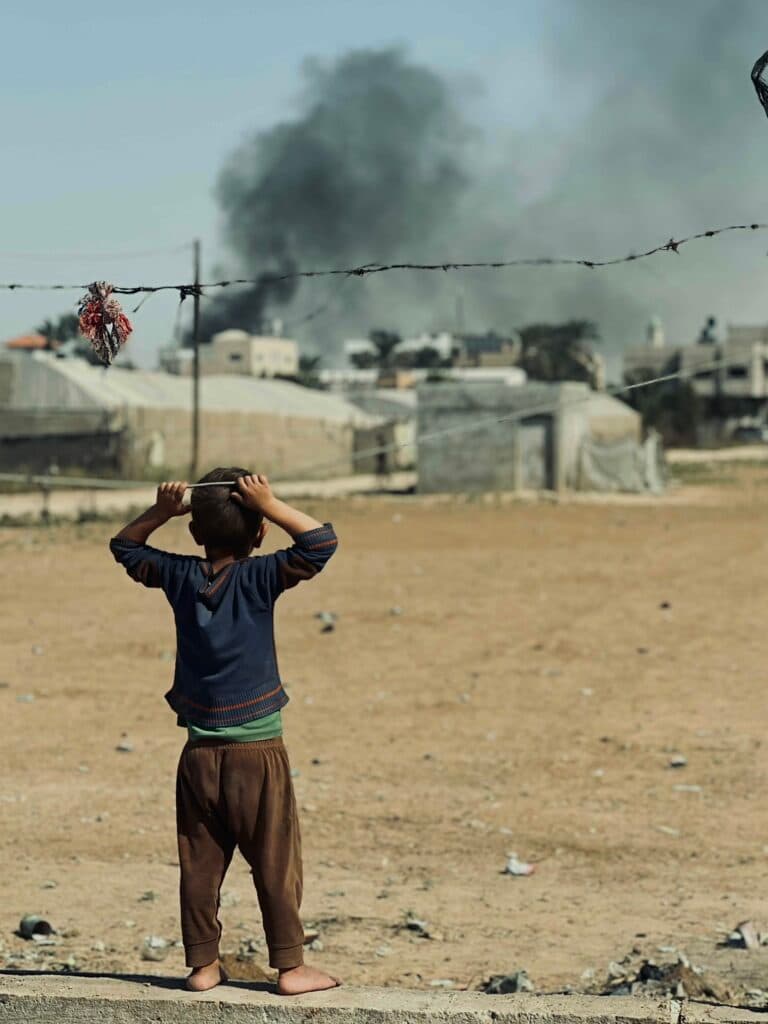
The Israeli occupation of Palestine continues to have a devastating impact on Palestinian communities.
Our vision is a resilient Palestinian civil society that champions democracy, human rights, and gender justice, focusing on increasing youth and women’s political and economic participation.
Diakonia, in partnership with local organizations, delivers vital humanitarian aid in Palestine, including winter clothes, hygiene kits, school supplies, and primary healthcare through mobile clinics. We address learning loss, promote youth empowerment, and support sustainable agriculture projects to improve food security.