Sri Lankan Human Rights Defender Wins Sweden's Per Anger Prize 2026
24 March, 2026The Per Anger Prize 2026 goes to Brito Fernando, who has spent more than 35 years demanding truth and justice for tens of thousands of families still waiting to know what happened to their loved ones.
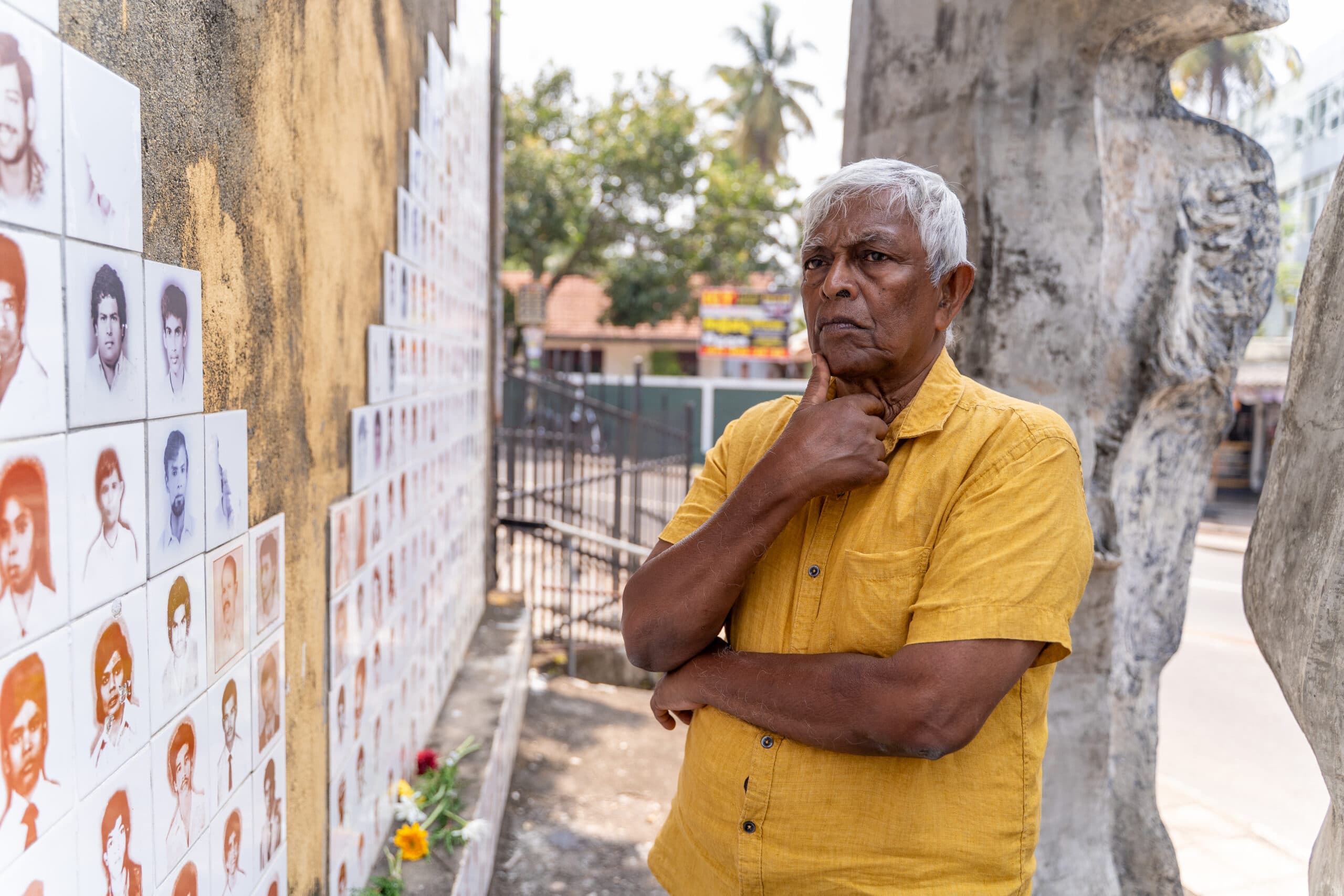
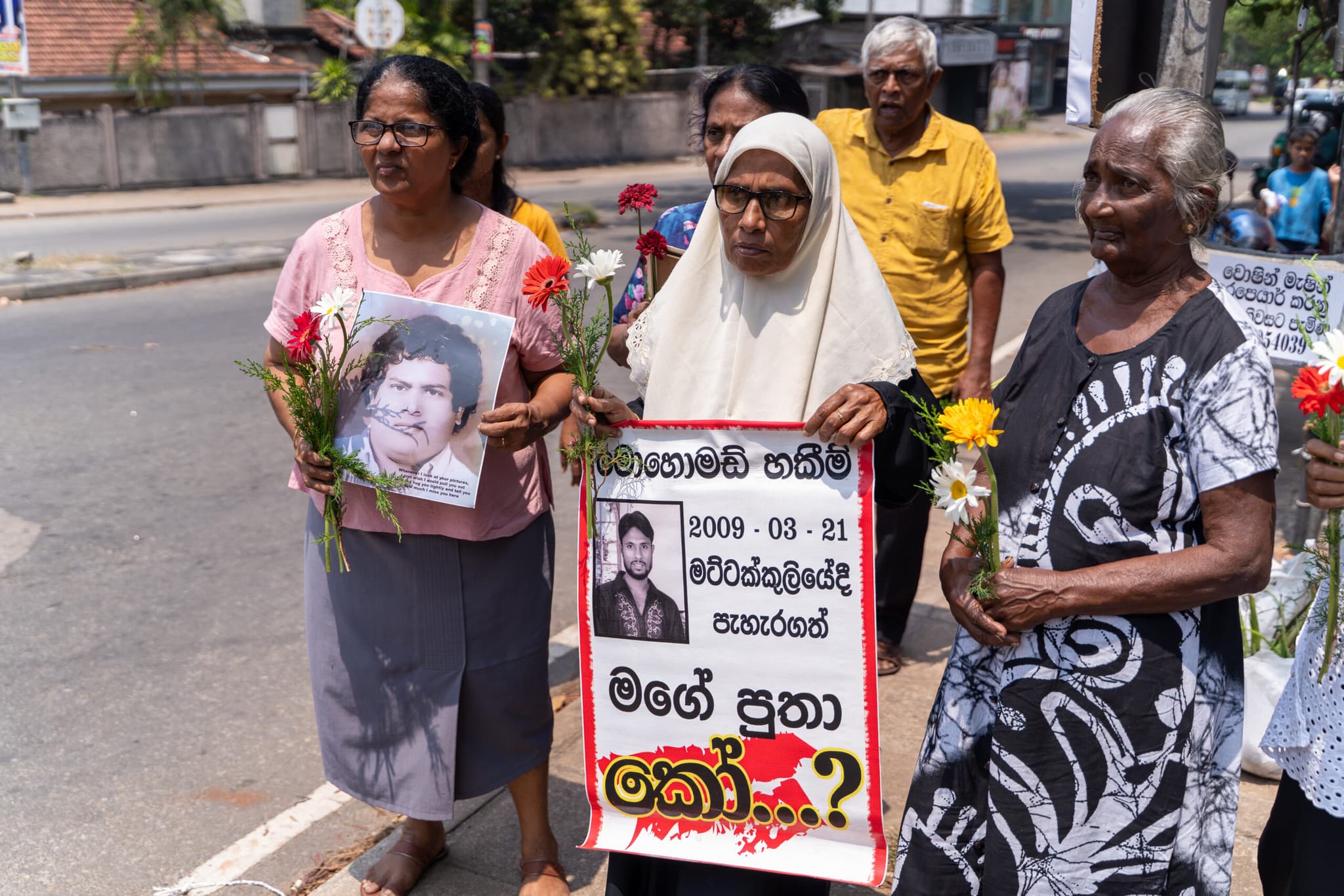
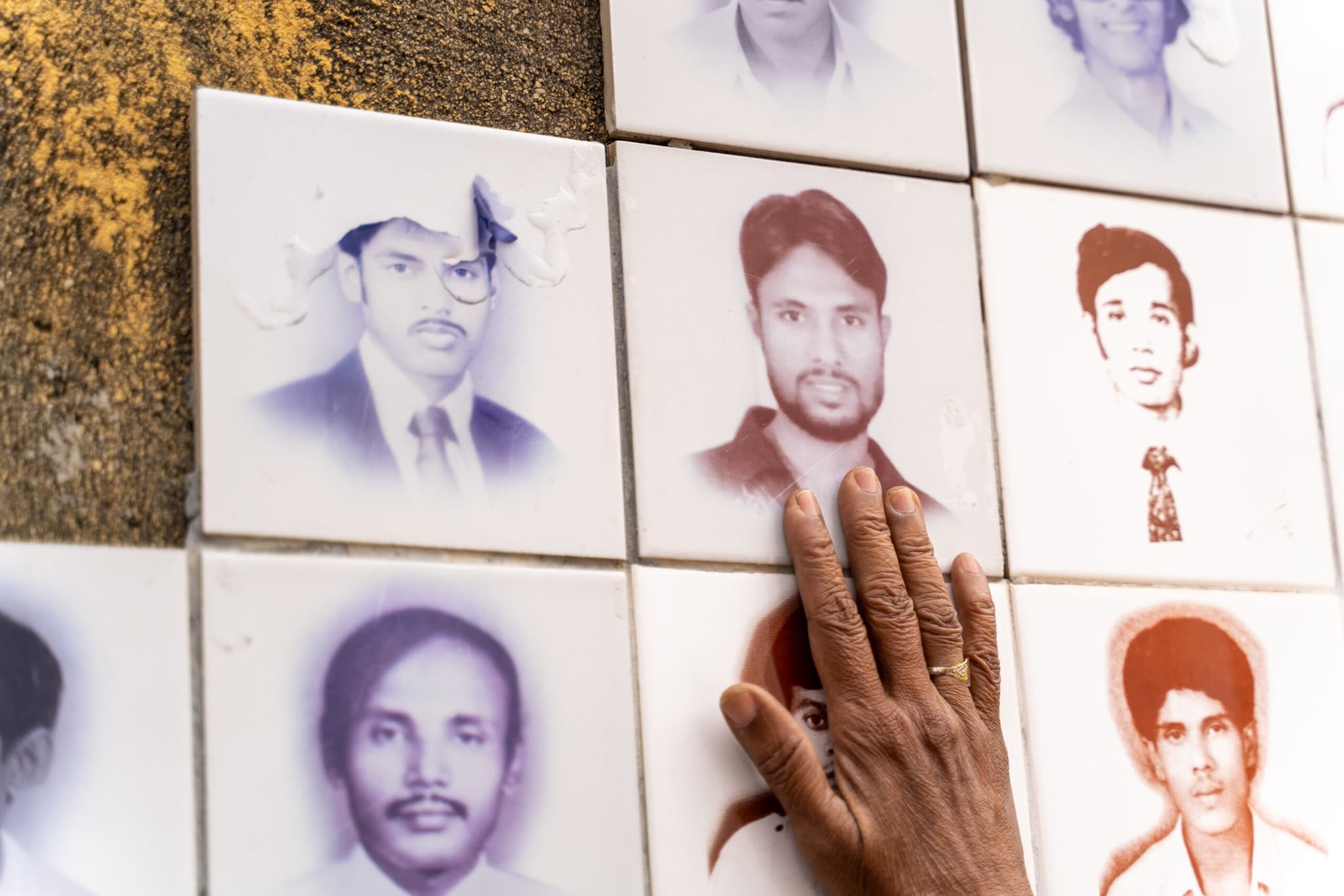
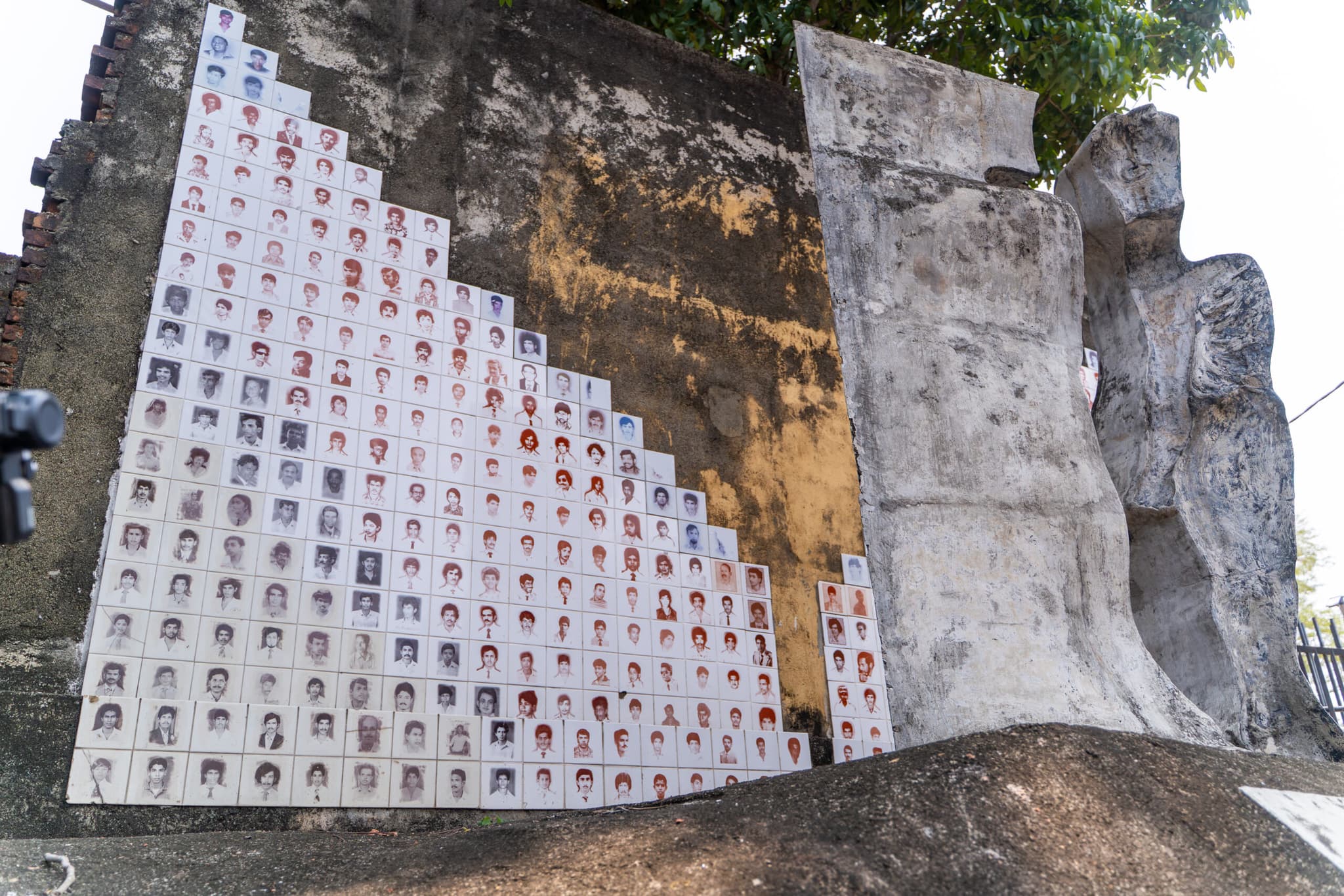
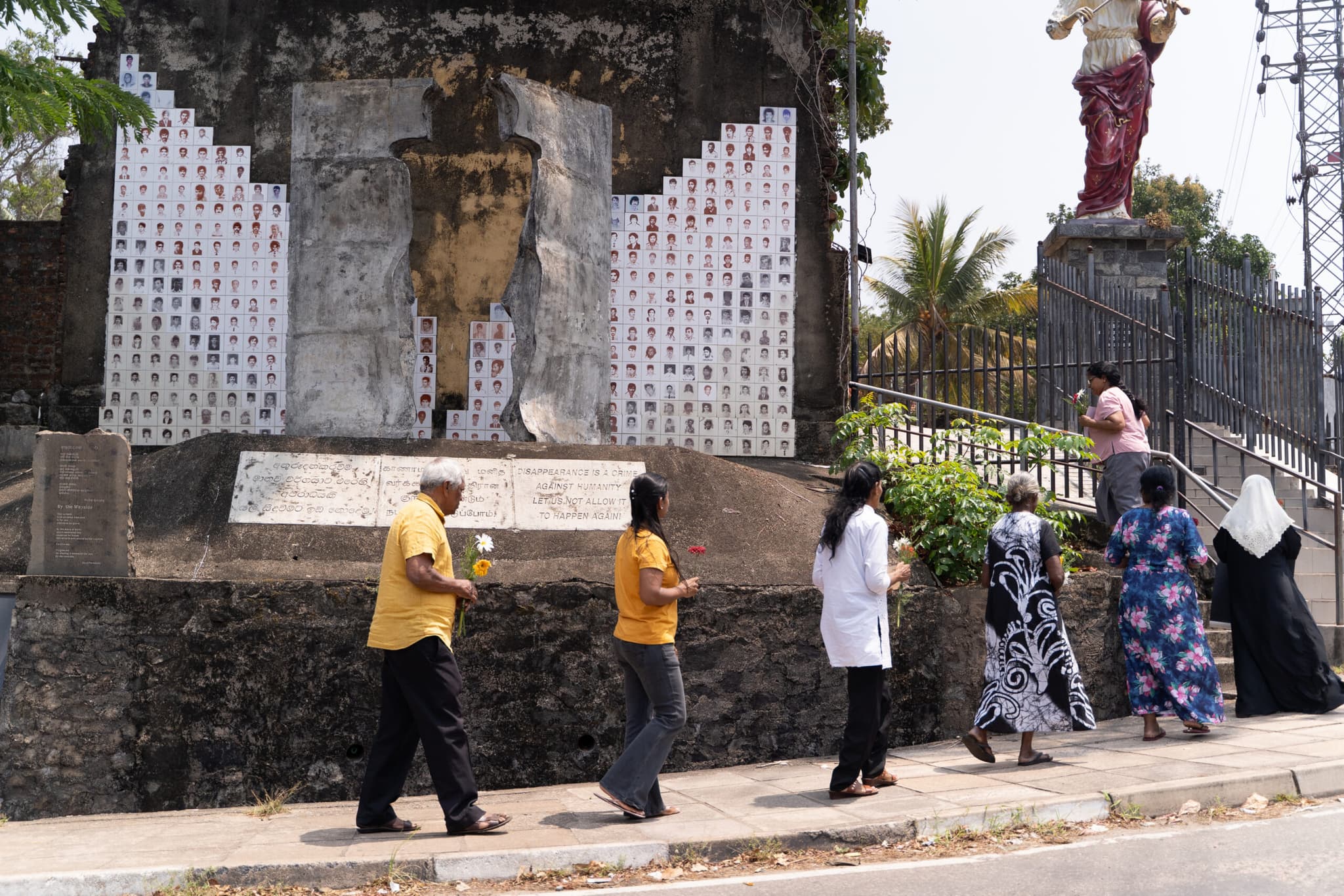
Every year on October 27th, families gather at a road junction in Seeduwa on the outskirts of Colombo. They come carrying photographs of their loved ones, people who were taken and never returned. At the center stands a public monument, its surface covered in over 800 faces, each one placed there by a family still waiting for the truth. And standing among them, as he has done every year since 1991, is Brito Fernando.
"I felt the tears of these mothers, because they are always crying," he says. "I just want to make them satisfied, at least to get the truth."
Fernando, 72, is the founder and president of Families of the Disappeared (FoD), an organisation representing over 20,000 registered families across Sri Lanka. Since 1989, he has been fighting for justice for the families of the tens of thousands of people forcibly disappeared during the country's decades of armed conflict and political violence.
A country and a man shaped by disappearance
Few would have predicted this path for Fernando. He spent his early years training to become a Catholic priest before turning to politics and union work. It was the violent disappearance of Ranjith Herath and M. Lionel, two men he knew in 1989, that changed everything and set him on a course he has never turned away from since. Their bodies were found shot dead and burned at a road junction in Seeduwa.
"It struck me very hard, because if I did go there, it was me who should have been laid there," Fernando recalled.
Together with Ranjith's fiancee, Jayanti Dandeniya, they began organising families of the disappeared, and October 27th, the date the two men were found, became the founding date of what would grow into a nationwide movement. Fernando formally established Families of the Disappeared (FoD) in 2004, building it into the only organisation of its kind working across all communities on disappearances in Sri Lanka.
The scale of the crisis his organisation confronts is vast. Sri Lanka has one of the worst records of enforced disappearances in the world. According to the UN Working Group on Enforced or Involuntary Disappearances in 2021, Sri Lanka has the second largest number of outstanding disappearance cases in the world. The scale of the crisis reflects decades of political violence: a brutal government crackdown on a leftist uprising in the south in the late 1980s, and a 26-year civil war between government forces and the Tamil separatist group the Liberation Tigers of Tamil Eelam (LTTE) that ended in 2009, the final stages of which saw widespread killings and mass civilian suffering. During this period, tens of thousands of people were taken by the State, by armed groups, or by paramilitary organisations and never returned to their families. To this day, the vast majority of cases remain unresolved and unpunished.
"Disappearance means it's an ongoing crime, an everlasting crime," Fernando says."The government has a responsibility to tell the families whether that person is alive or not. Then only they can satisfy themselves."
Bridging a divided country
What distinguishes Fernando's work is not only his personal courage but his ability to unite families across Sri Lanka's deep ethnic, religious and linguistic divides bringing together Sinhalese, Tamil and Muslim communities from the South, the North and the East, in a country where such bridges have historically been difficult to build.
The annual October 27th commemoration he initiated in 1991 has grown into an islandwide event. Over the decades, Fernando led and mobilized the movement that put pressure on the Sri Lankan government to ratify the UN Convention on Enforced Disappearances in 2015, and lobbied for the establishment of an Office on Missing Persons and a fair reparations mechanism. Yet progress on accountability has stalled.
"Every 20 to 30 years in Sri Lanka, an uprising comes, and thousands and thousands of youths have been killed or disappeared," Fernando says. "By telling the truth to the parents, by compensating them and by giving them justice, we can make it not happen again."
Arrested, threatened and still going
The work has come at a significant personal cost. Fernando has been arrested and detained multiple times, won a Supreme Court case against the state after being falsely imprisoned, had his home attacked, and been repeatedly summoned for questioning by the country's Terrorism Investigation Division (TID). When asked where his strength comes from, his answer is simple.
“I was recognised as a human rights activist only because of those families who were always behind me, who were always on the street with me, who were always facing those government threats."
35 Years Without Giving Up
Fernando learned he had won the Per Anger Prize while riding home on a bus back from a protest against a proposed amendment to the Prevention of Terrorism Act, a detail that says everything about the pace at which he still works.
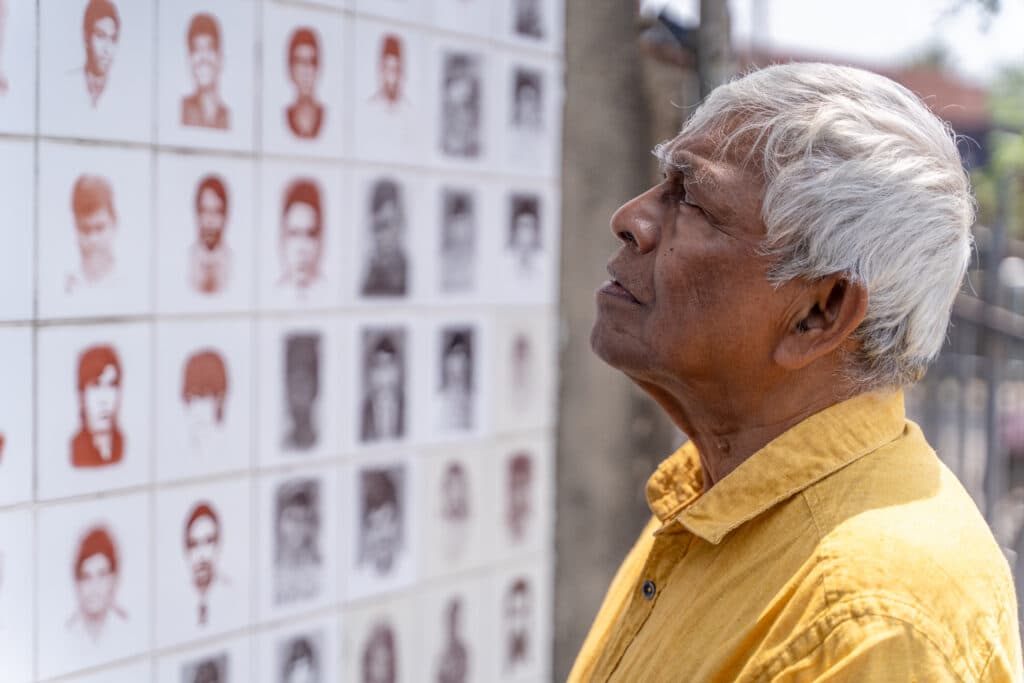
– I never thought I’d be selected, because this is an honour not for me. This is for the families who have been holding on for more than 35 years without giving up. So, this is the encouragement for them.
Petra Mårselius, Director-General of the Living History Forum and chair of the Per Anger Prize jury, regards Brito Fernando as a worthy laureate.
“With great courage and at considerable personal risk, Brito Fernando has acted entirely in the spirit of Per Anger. Together with families of the disappeared in Sri Lanka, he has for decades kept the issue of truth and accountability alive. It is important to highlight human rights defenders who work on issues that might otherwise be forgotten,” says Petra Mårselius.
Diakonia, which nominated Fernando for the prize, welcomes the recognition as a signal of international solidarity.
"Brito Fernando's courage and commitment over more than three decades embodies exactly what the Per Anger Prize stands for. This recognition belongs not just to him, but to every family in Sri Lanka who has refused to let the truth be buried. Diakonia is proud to stand alongside him and the thousands of families whose resilience continues to inspire us all," says Mattias Brunander, Diakonia's Secretary-General.
For Fernando, the fight is far from over, and he is already thinking about who will carry it forward.
"Now we must continue, you must continue, in getting the truth, otherwise the third generation is losing hope. If the third generation of those families does not take the leadership, the government knows the issue will meet a natural death. The disappearance issue will itself disappear. That's why we want to keep it alive, reminding the public: this is what happened, and this could happen again."
About the Per Anger Prize
The Swedish Government’s international prize for human rights and democracy was established in 2004 and is awarded annually by the Living History Forum. It is presented to a person or organisation that has made significant humanitarian and pro-democracy contributions in their home country. The prize is named after diplomat Per Anger, who worked in Budapest during the Second World War and helped save Hungarian Jews from the Holocaust.